

Knowtable Moves
Tools for continuity and knowledge capture at workplace transitions.
Workplace transitions! As organizations, we spend serious amounts of time IN them and making up ground BECAUSE of them. Transitions like moves down the hall, transfers, promotions, retirements, resignations, expired terms, career changes, and leaves of absence.
Transitioning people know things about their work and how to get things done—things that managers, successors, and others staying on—need. Smart things go missing or networks drop off because change can be messy. Learning and leverage opportunities go untapped.
Workplace transitions call for questions! The Duly Knowted tools suggest the questions we could and should be asking during time-sensitive transition windows. With Duly Knowted, the set-up is done for you: The formulating, the asking, the spaces for recording notes, and formats for distribution.
Our practical tools tap the power of questions to prompt, recover, and connect larger and smaller dots of organizational wisdom. The experiences and insights of a transitioning contributor—often undocumented or filed away—are re-discovered and activated. Indispensable to successors and those staying on!
The Questions are Ready to Go!
The Duly Knowted tools are sets of questions. The sets are ready to go, even for short-notice transitions. There’s no training required or systems to integrate or software to update. Assembled as Adobe PDFs, our tools anticipate the kinds of questions the manager or colleagues of a transitioning employee want to ask but don’t think of at the time.

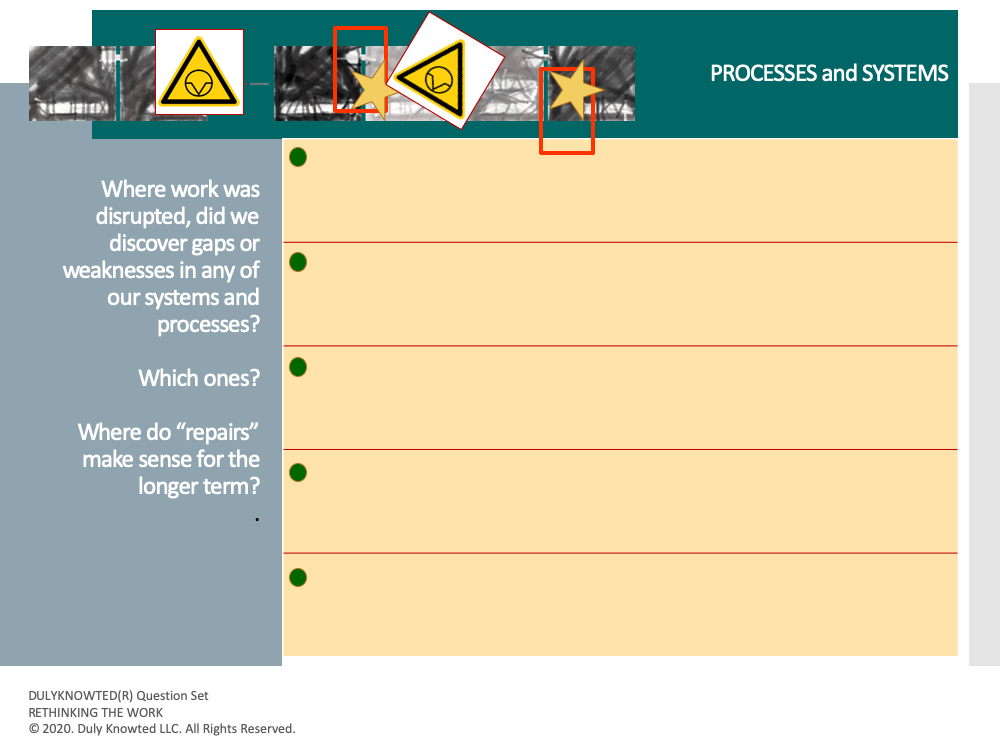
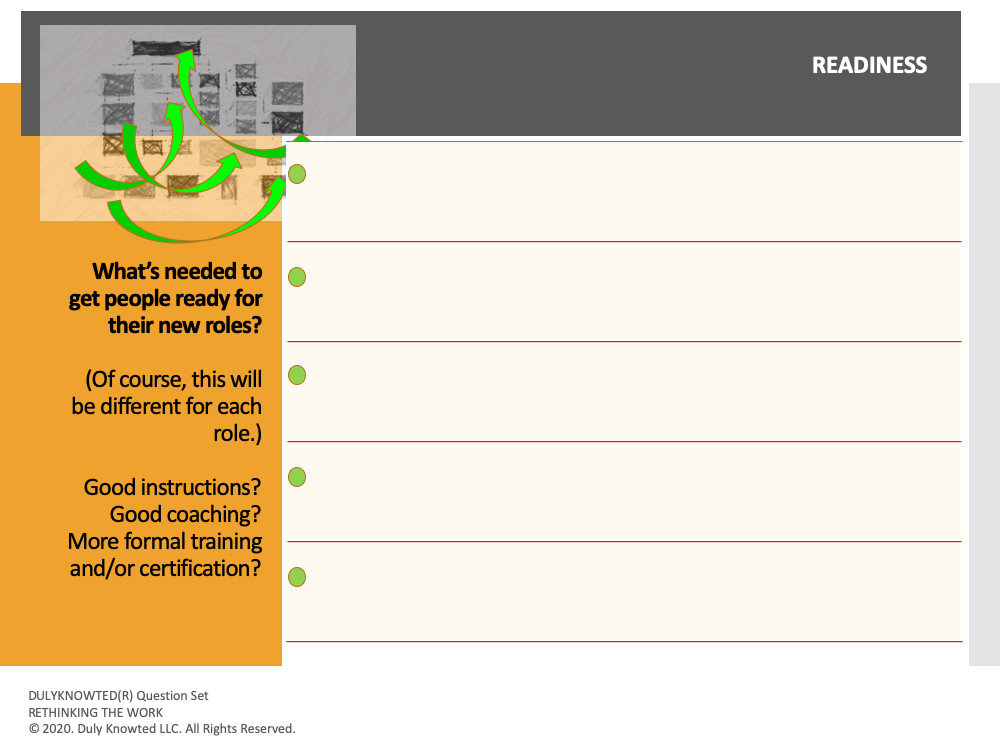
Contributors in transition enter comments and responses to the questions directly in the tools. They’re able to work with the tool(s) on their own, with partners (such as a coach or mentee), or in small group debrief discussions.
Even short blocks of time are well spent!

Knowtable Ways to Apply What You Capture…
How will you use what’s captured? Let’s count the ways! to apply the insights and notes collected.
Here’s a starter list.
 Update job descriptions. Discover what the incumbent’s job really involves.
 Have more productive exit conversations.
 Interview potential successors with better questions.
 Set up first projects for onboarding new people.
 Gain insight to best problem solving approaches.
 Define training needs. Organize content for skills training.
 Locate key documents and best examples—customer letters, forms, summaries, checklists, Proposals.
 Discover under-utilized resources (human and non-human).
 Finish work in progress.
 Find best resources— vendors, contractors, software, websites, apps.
 Protect a professional network from dissolving.
 Follow through on key marketing opportunities.
 Synch key calendar dates, deadlines, and timelines.
 Clarify fuzzy procedures or add a missing step.
 Build a case for a new project or initiative.
 Make connections across department boundaries.
 Define competencies or fine tune a competency model.
 Contribute to industry knowledge.
 Revisit “moving forward” priorities.
 Refine a succession plan.
 Supplement coaching and mentoring guides.
 Create performance support tools.
 Acknowledge peers worthy of recognition.
 Smoothly transition a customer relationship.
 Target production or quality issues.
 Surface specific customer service concerns.
 Address time management challenges unique to the role.
